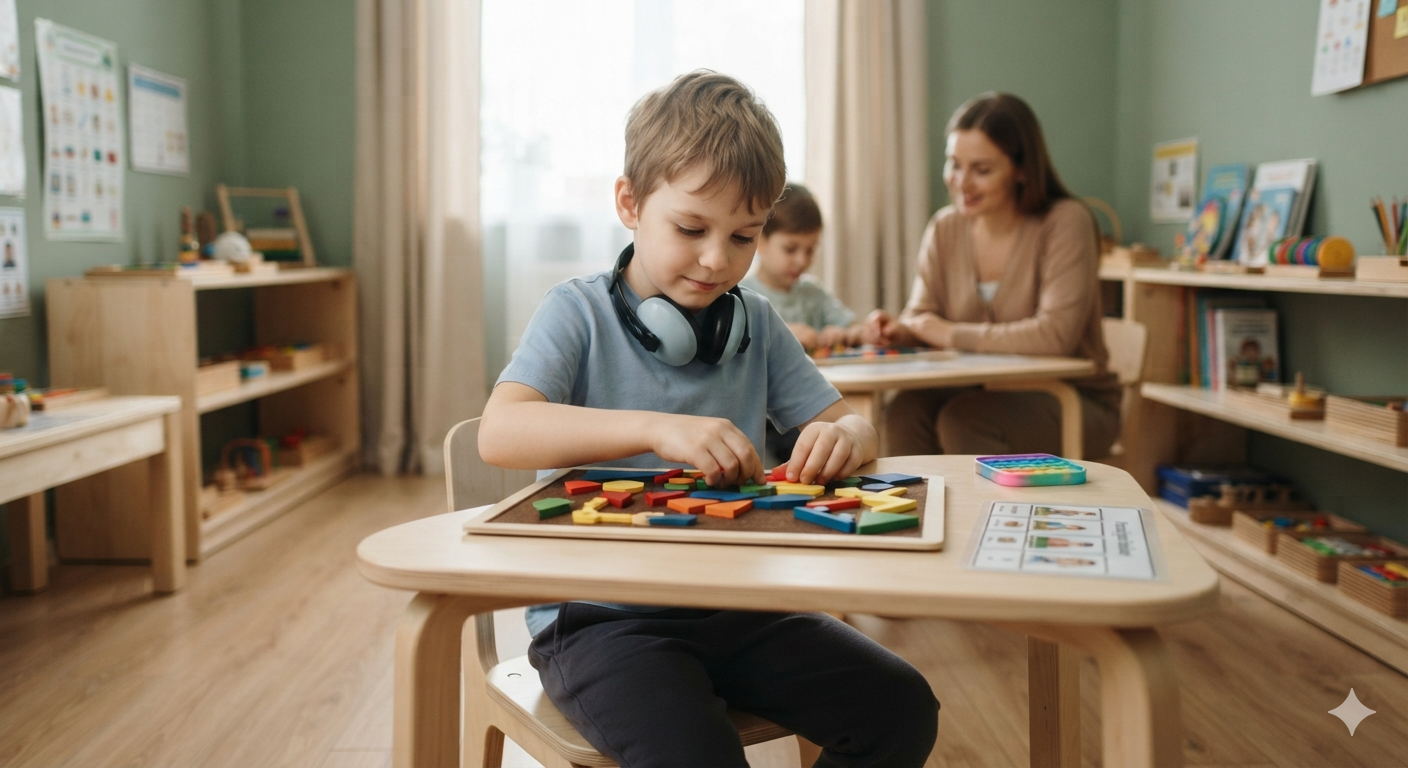
Building a structured diy sensory diet schedule at home is one of the most effective ways to help a child with ADHD stay focused, calm, and emotionally regulated. Does your child struggle to sit still during homework, crash into the sofa, or get completely overwhelmed by everyday noises? If you are a parent of a child with Attention Deficit Hyperactivity Disorder (ADHD), these daily struggles can feel exhausting. You might feel like you are constantly nagging, but the truth is your child’s brain is simply looking for the right type of sensory fuel to feel balanced.
Despite the word “diet,” a sensory routine has nothing to do with food. Instead, it is a customized menu of quick, physical activities that gives your child’s brain the exact sensory inputs it craves. This comprehensive guide will help you understand your child’s sensory profile and build a practical, fun daily schedule together.
What is a Sensory Diet and How Does it Help ADHD?
A sensory diet is a structured plan featuring specific physical activities spread throughout the day. Dr. A. Jean Ayres, an occupational therapist and developmental psychologist, pioneered the concept of sensory integration. She discovered that when a child’s brain struggles to process sensory information effectively, it directly impacts their attention, emotions, and behavior.
The core concept relies on the breakthrough neurobiological framework of Ayres Sensory Integration (ASI)®, which has been clinically proven to enhance a child’s processing functions, emotional regulation, and daily adaptive behaviors.
For children with ADHD, their sensory processing systems are often operating in overdrive or under-drive. A structured sensory diet helps by:
- Improving focus and attention during schoolwork or tasks.
- Reducing daily anxiety and preventing emotional meltdowns.
- Building better body awareness so they do not bump into objects.
- Helping them self-regulate when transitions feel difficult.
According to clinical research published on the National Institutes of Health (NIH) PubMed Central, parent-led sensory training and structured sensory diets can significantly reduce attention deficits in children with neurodivergent needs.
Identify Your Child’s Unique Sensory Profile
Before building your daily routine, you need to understand how your child interacts with the world. Neurodivergent children generally fall into two categories, though many exhibit a mix of both depending on the environment:
Sensory Seekers (Under-responsive)
These children need more sensory input to wake up their brains. They are often labeled as hyperactive because their bodies are trying to self-medicate through movement.
- Signs: Constantly jumping, touching everything, chewing on shirts, speaking loudly, hugging tightly, and loving fast movement.
Sensory Avoiders (Over-responsive)
These children feel completely overwhelmed by everyday surroundings. Their brains process sensory input too intensely, triggering a fight-or-flight survival response.
- Signs: Covering ears at loud noises, crying during clothing changes (hating tags or seams), refusing specific food textures, and hiding from bright lights.
The Three Golden Senses for ADHD Regulation
While we all know the classic five senses (sight, sound, smell, taste, touch), occupational therapists focus heavily on three hidden internal senses to help regulate an ADHD brain:
Proprioception (The Body Awareness Sense)
This sense tells your brain where your joints and muscles are in space. Activities that compress or stretch muscles are called “heavy work”. Heavy work is the single most grounding and calming input for any neurodivergent child.
Vestibular (The Movement & Balance Sense)
Located in the inner ear, this system detects motion, speed, and changes in head position. Fast, erratic movement wakes a sleepy brain up, while slow, rhythmic movement calms an anxious brain down.
More than one-third of kids with an ADHD diagnosis struggle with foundational equilibrium, balance, and spatial posture.
Tactile (The Touch Sense)
Deep pressure touch (like a firm hug or weighted blanket) releases serotonin and dopamine in the nervous system. Light touch (like a tickle or loose thread) can trigger irritation or hyper-focus loops.
Master List of At-Home Sensory Diet Activities
You do not need expensive clinical gear to build an effective sensory routine. You can easily find everyday items around your house to fulfill these therapeutic needs:
Proprioceptive “Heavy Work” Activities:
Animal Walks: Have your child do crab walks, bear crawls, or frog hops across the living room.
The Sofa Cushion Sandwich: Press a soft sofa cushion gently down on top of your child while they lie on the floor to provide calming, deep muscle pressure.
Wall Push-Ups: Have your child stand facing a wall and do 10-15 solid push-ups against it.
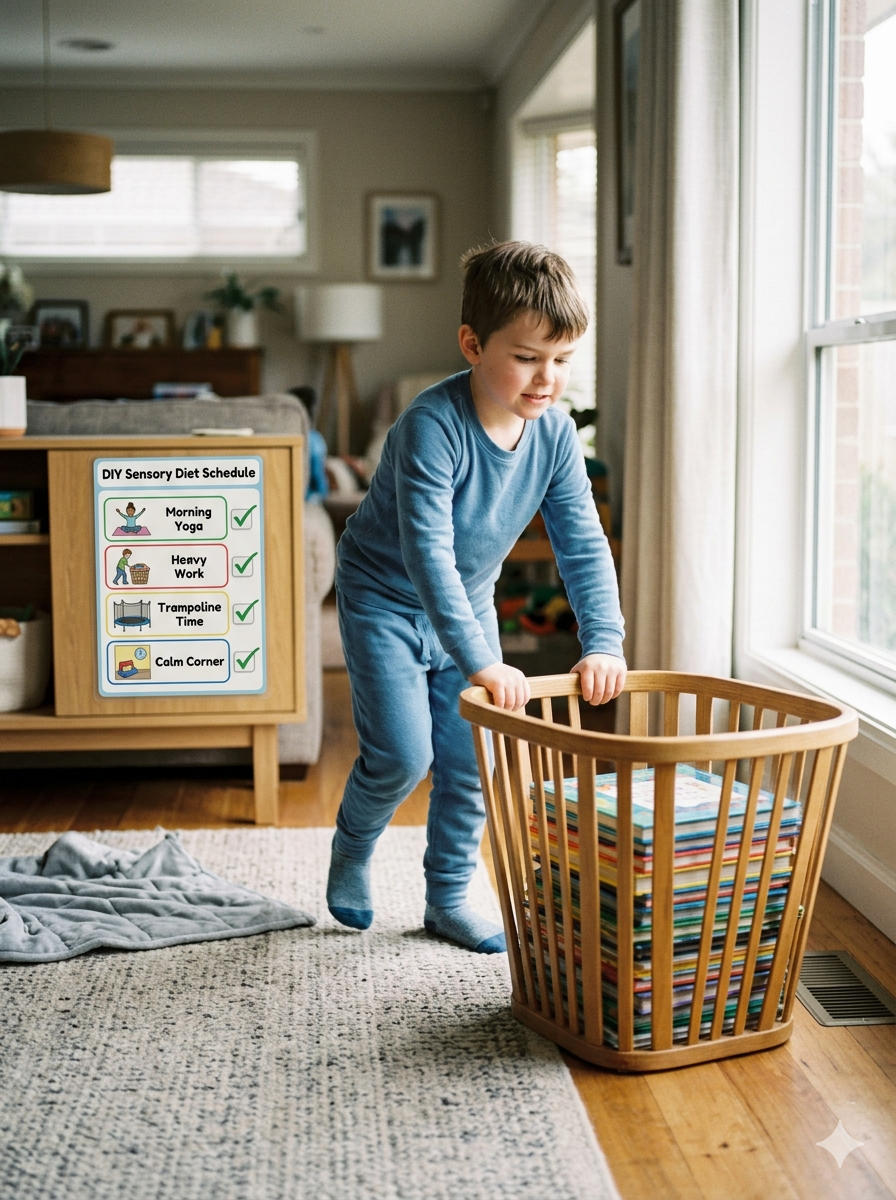
Helpful Laundry Helper: Let them carry a heavy laundry basket or push full grocery bags across the kitchen floor.
Vestibular Activities:
Mini Trampoline Jumps: 5 minutes of jumping can satisfy a sensory seeker’s urge for intense movement.
Yoga Ball Rocking: Let your child sit or lay belly-down on a large exercise ball while you gently rock them back and forth.
The Swivel Chair Spin: Allow 3-5 slow, controlled spins in an office chair to reset focus before starting schoolwork.
Tactile & Oral Sensory Activities
Sensory Bins: Fill a plastic bin with dry rice, beans, or water beads and hide small plastic toys inside for them to dig up.
Crunchy & Sour Snacks: Offer carrots, apples, ice cubes, or sour candies when your child needs to increase alertness during home tasks.
Fidget Tools: Keep a basket of stress balls, putty, or pop-it toys handy for quiet desk times
How to Structure Your DIY Sensory Diet Schedule
The key to an effective sensory diet is consistency rather than waiting for a meltdown to occur, weave these activities directly into your child’s natural daily schedule.Every child has a unique sensory profile. Before you begin building out these daily time blocks, remember that a successful diy sensory diet schedule at home should be flexible, playful, and tailored to whether your child is seeking or avoiding sensory inputs.
| Time of Day | The Goal | Suggested Activities |
| Morning Routine | Wake up the brain & steady the nervous system. | 5 minutes of jumping on a mini trampoline. Eating a crunchy breakfast (e.g., granola or apples). 10 wall push-ups before getting dressed. |
| Before Homework | Ground the body for focused sitting. | 3 minutes of animal walks Doing heavy chair push-ups. Providing a sensory chewing tool or chewing gum. |
| Afternoon Decompress | Release pent-up energy from the school day. | Outdoor park play, swinging, or riding a bicycle. Squeezing playdough or kinetic sand Free time inside a designated “cozy crash corner”. |
| Evening/Wind-Down | Lower arousal levels for a peaceful bedtime. | A warm bath with calming, dim lighting Deep-pressure full body hugs. Reading under a weighted blanket or using firm pillow pressure. |
Reading under a weighted blanket or using firm pillow pressure can help lower arousal levels for a peaceful bedtime. However, if your child is already past the point of simple overstimulation, it is vital to understand the AuDHD meltdown vs sensory overload differences so you can apply the right emergency containment strategies instead of routine management.”
How to Get Your ADHD Child Excited About Their Schedule
Giving children a sense of autonomy in selecting their routine builds their foundational executive functioning, self-regulation, and long-term habits.
If you try to force a sensory schedule onto a child with ADHD, it can quickly devolve into an frustrating power struggle. Instead, make them an active co-creator of their new system:
Frame Activities as Secret Missions
Instead of telling your child, “Go do your heavy work wall push-ups now,” gamify the experience. Frame it as a game or secret mission: “The living room roof is falling down! Quick, use your strong muscles to hold the wall up for 20 seconds!”
Create a Fun Visual Chart
Children with ADHD process visual information much better than verbal instructions. Write out or draw their activities using a colorful whiteboard or visual chart. For a great premade example, parents frequently use interactive toolkits like the uplift kids interactive Rewards and chores board to effortlessly track daily habits and sensory goals alongside small visual rewards.
Let Them Choose the Menu
Offer autonomy by letting your child pick their preferred physical input from a small list of options. For example, you can ask: “Before we sit down to read, do you want to do the frog hop across the room or do 5 big spins in the office chair?”
Tracking Progress and Tuning the Diet
If home routines require further adjustment, structured parent-coaching sessions with a specialist can reduce household stress and boost parenting self-efficacy.
Your child’s sensory threshold will change based on growth, stress, and their changing environment. Because of this, it is important to treat your diy sensory diet schedule like a science experiment that you adjust over time. Stick to the same basic routine for at least 14 days to let their nervous system adapt. It is important to treat your schedule like a science experiment:
- Keep it for 2 Weeks: Stick to the same basic routine for at least 14 days to let their nervous system adapt.
- Watch the Rebound: If a vestibular activity like spinning or swinging leaves your child more hyperactive or dysregulated rather than calm, immediately follow it with a grounding proprioceptive task like a tight bear hug or weighted blanket to restabilize them.
- Consult the Experts: Bring your at-home schedule notes to your pediatrician or occupational therapist to refine your approach over time.
For additional scientific strategies on structuring home routines and managing behavioral executive function, explore the evidence-based guidelines from the Harvard Center on the Developing Child.
Summary Checklist for Parents
- Determine if your child is primarily a sensory seeker or a sensory avoider.
- Focus heavily on proprioceptive “heavy work” to naturally calm down hyperactivity.
- Build a visual schedule that integrates sensory breaks before high-focus tasks.
- Keep tasks gamified, brief, and highly engaging to sustain their attention.
- Consult a certified Occupational Therapist to personalize your sensory approach.
- Use this diy sensory diet schedule consistently every day to help your child’s brain adapt.
Parent Tip: If your child specifically struggles to get out of the house in the mornings, a sensory diet works best when paired with transition tools. Read our complete guide on managing an audhd child school transitions routine to stop morning meltdowns safely.
A structured morning routine prepares the nervous system, but classroom environments remain highly unpredictable. To protect your child from auditory triggers during the school day, pair their home routine with the right headphones for an AuDHD child at school to maintain focus and ease classroom anxiety
Medical Disclaimer: The information provided in this article is for educational purposes only and does not replace professional medical advice, diagnosis, or treatment. Always consult with a licensed Occupational Therapist (OT), pediatrician, or mental health professional before starting a new sensory intervention program for your child.
Author : Dr Ravi Bhatt (BHMS)