When a migraine strikes, the throbbing pain can feel entirely consuming, leaving many patients searching for the best magnesium for migraines to find natural, long-lasting relief. If you have ever stood in a pharmacy aisle staring at endless supplement bottles, you already know that choosing the right formulation can feel incredibly overwhelming.
One of the most clinically backed, non-drug options available today is magnesium for migraines.
But if you have ever walked down the supplement aisle, you know how confusing it can be. There are dozens of different forms of magnesium, and they all do different things in the body. In this guide, we will break down the science of how magnesium calms a sensitive brain, which specific types work best for head pain, and how to use it safely.
The Science: Why Does Your Brain Need Magnesium?
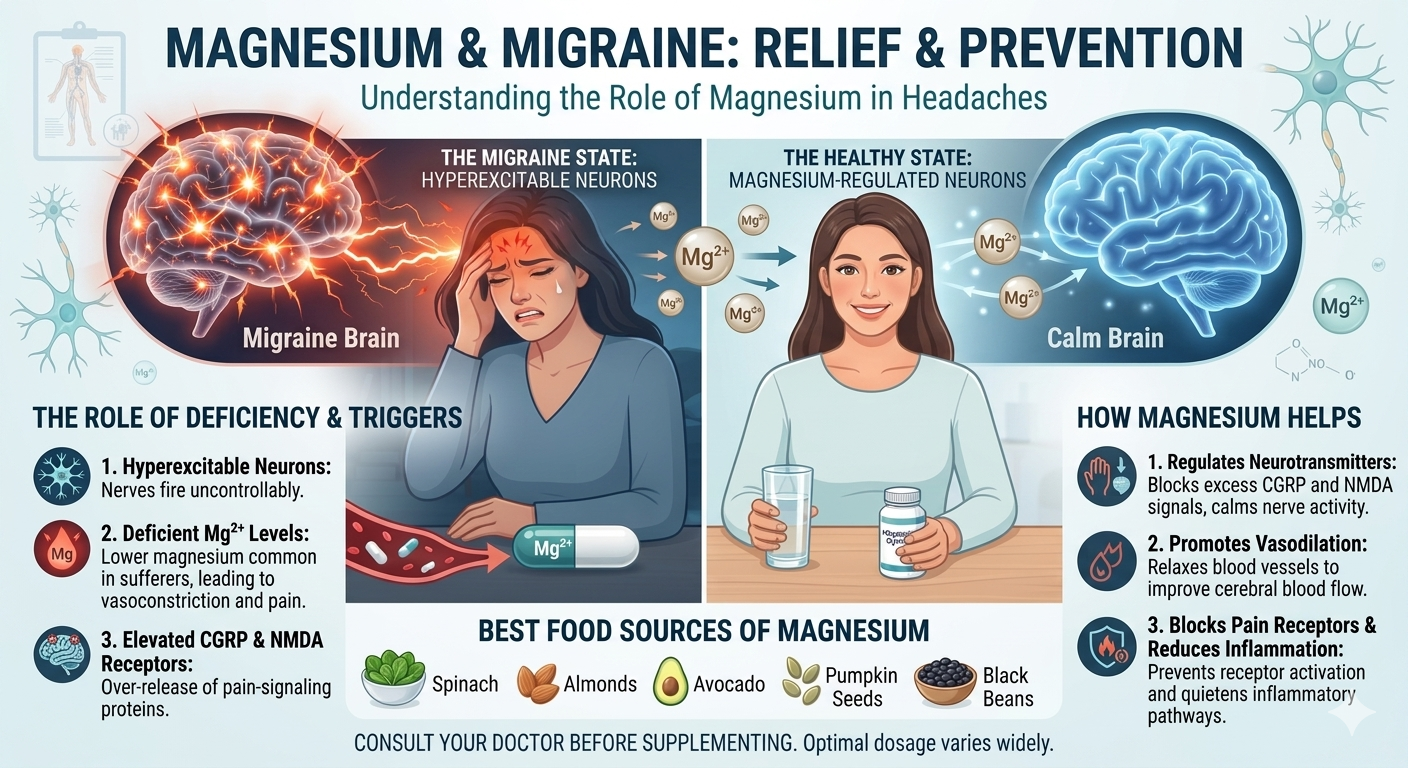
To understand why magnesium is so powerful, we have to look at what happens during a migraine attack. A migraine brain is naturally highly sensitive to environmental and physical changes. When a trigger occurs, a wave of intense electrical activity sweeps across the brain, causing blood vessels to constrict and releasing inflammatory chemicals that cause throbbing pain.
Magnesium acts as a natural protective shield for your nervous system. It helps manage head pain in three distinct ways:
Blocks Pain Channels:
Magnesium acts as a gatekeeper in your brain cells, blocking a specific neurotransmitter receptor (called NMDA) that is responsible for sending pain signals throughout your nervous system.
Relaxes Blood Vessels
It prevents blood vessels from spasming and narrowing, which is a major contributor to the intense pulsing sensation of a severe headache.
Calms Stress Signals
Magnesium naturally reduces the release of stress chemicals in the brain, preventing the physical tension that frequently acts as a primary trigger.
Clinical data suggests that many individuals who suffer from chronic headaches actually have lower systemic levels of magnesium than those who do not.
Migraine with Aura” & Menstrual Sub-types:
🧠 Special Focus: Does Magnesium Work for Migraines with Aura?
If your migraine attacks begin with visual disturbances—such as flashing lights, blind spots, or zig-zag patterns—your brain is experiencing a temporary electrical wave known as Cortical Spreading Depression (CSD).
Clinical research from platforms like the American Migraine Foundation indicates that magnesium is uniquely effective for this specific subtype. It serves as a natural block against CSD, helping to quiet the hyper-excited nerve signals before the visual aura can fully manifest into a debilitating headache.
🩸 Magnesium for Menstrual and Hormonal Migraines
Many women experience a severe drop in head-pain resistance right before or during their menstrual cycle. This occurs because fluctuating estrogen levels can cause systemic magnesium levels to drop sharply. Taking a daily magnesium supplement helps smooth out these hormonal drops, stabilizing blood vessel tone and preventing the severe vascular spasms that trigger menstrual migraines
Comparing the Types: Which Magnesium is Best for You?
Clinical reviews support daily oral supplementation of magnesium to reduce the overall frequency of chronic attacks.
Not all supplements are absorbed by your body the same way. To find the best magnesium for migraines, here are the three most common forms:
Magnesium Oxide (The Clinical Choice)
This is the specific form most frequently utilized in major clinical research trials.
- The Pros: It has a very high concentration of actual magnesium per milligram, making it highly effective at preventing neurological triggers.
- The Cons: It is not absorbed quite as easily by the digestive tract, which means it can cause mild stomach upset or a laxative effect in some patients.
Magnesium Citrate (The Digestion-Friendly Option)
Magnesium citrate is bound with citric acid, making it highly water-soluble.
- The Pros: Your body absorbs this form much more efficiently than oxide. It is an excellent choice if you suffer from both chronic headaches and occasional constipation.
- The Cons: Because it draws water into the intestines, taking too high of a dose too quickly can still cause loose stools.
Magnesium Glycinate (The Calming Option)
This form is bound to glycine, a calming amino acid that naturally promotes relaxation and better sleep.
- The Pros: It is incredibly gentle on the stomach and rarely causes digestive side effects. It is highly recommended if your attacks are frequently triggered by anxiety, stress, or poor sleep hygiene.
Magnesium L-Threonate (The Brain-Penetrating Form)
While traditional magnesium oxide or citrate works well for the rest of your body, a newer form called Magnesium L-Threonate has gained significant interest in neurological care.
The Pros: This unique form is chelated to allow it to easily cross the blood-brain barrier. This means it directly increases magnesium concentrations inside your brain tissue more efficiently than other forms. It is an excellent option if your migraines are accompanied by severe brain fog, memory challenges, or cognitive fatigue.
The Cons: It generally features a lower amount of elemental magnesium per capsule compared to magnesium oxide, meaning you may need to take multiple pills to reach your daily target. It is also typically more expensive than standard options.
How to Safely Start Your Regimen
If you want to use magnesium effectively, consistency is key. Unlike rescue medications, daily supplements must build up in your system over several weeks to stabilize your nervous system.
Typical Preventative Dosage
Clinical guidelines frequently evaluate therapeutic doses between 400 mg and 600 mg daily for adult preventative care.
Always look closely at the physical supplement bottle label to check the elemental weight of the magnesium, rather than just the total compound weight, so you know exactly how much active mineral you are getting
Start Low and Slow
To give your digestive system time to adapt, consider starting with a lower dose (like 200 mg daily) and gradually increasing it over two weeks.
Track Your Results
Use your patient headache diary to log your daily supplement intake alongside your symptoms to see if your attack frequency begins to drop over a 6 to 8-week period.
⏰ When is the Best Time to Take Your Magnesium?
Many patients wonder if they should take their supplement in the morning or right before bed. The answer mostly depends on the specific type of magnesium you choose:
Magnesium Glycinate:
Because it contains glycine (a calming amino acid), it is highly recommended to take this form 1 to 2 hours before bedtime. It helps relax muscles and supports a deeper, more restful sleep.
Magnesium Oxide and Citrate:
These are best taken with a meal (either breakfast or dinner). Taking them on an empty stomach increases the chances of experiencing mild stomach cramping or loose stools.
Patient Tip: If your target dose is 400 mg or higher, consider splitting the dose into two smaller portions (e.g., 200 mg with breakfast and 200 mg at dinner). This simple trick makes it much easier on your digestive system.
⚠️ Critical Safety: Who Should Avoid Magnesium Supplements?
Even though magnesium is a completely natural mineral, it acts like a mild medication inside the body. It is not safe for everyone, and you must talk to your doctor first if you fit into any of the following categories:
Kidney Problems:
Your kidneys are responsible for filtering and removing extra magnesium from your body. If your kidneys are not working at 100%, magnesium can build up in your bloodstream to dangerously toxic levels.
Heart Conditions:
People with a history of certain heart rhythm issues, like a slow heart rate (bradycardia) or heart block, should approach magnesium with caution.
Pregnancy :
High-dose oral magnesium oxide up to 400 mg is generally considered very safe during pregnancy (often used to prevent pregnancy-related headaches), but your OB/GYN must supervise your dosage.
💊 Important Drug Interactions to Watch For:
Antibiotics :
Magnesium can bind to common antibiotics (like tetracyclines or fluoroquinolones), making them less effective at fighting infections. Take them at least 2 hours before or 4 to 6 hours after your magnesium.
Blood Pressure Medications:
Magnesium naturally relaxes blood vessels and can lower blood pressure. Combining it with prescribed blood pressure pills could cause your pressure to drop too low, causing dizziness.
Osteoporosis Medications (Bisphosphonates):
Magnesium blocks the absorption of these bone-building drugs. Separate them by at least two hours.
🩺 How Leading Headache Societies View Magnesium
To ensure our advice aligns with global medical standards, it helps to look at formal clinical guidelines. Both the American Headache Society and the American Migraine Foundation classify oral magnesium as a “probably effective” (Grade C) non-drug option for reducing how often migraines occur.
Clinical trials show that consistent daily use can help drop total monthly migraine days by roughly 2 to 3 days. For many patients, headache specialists will pair daily magnesium with other natural nerve-stabilizers, specifically Riboflavin (Vitamin B2) at 400 mg daily and Coenzyme Q10 (CoQ10).
Dietary Magnesium Sources:
🥑 The Migraine Prevention Diet: Top Whole-Food Sources of Magnesium
While oral supplements are an excellent way to fix a systemic deficit, optimizing your daily meals provides a baseline defense against nerve inflammation. Adding these magnesium-rich foods to your grocery list can help keep your nervous system balanced naturally.
Leafy Greens: Cooked spinach and Swiss chard are loaded with bioavailable minerals.
Seeds and Nuts: Pumpkin seeds, chia seeds, and almonds make fantastic, headache-safe snacks.
Legumes: Black beans, lentils, and chickpeas support gut health while delivering stable magnesium doses.
Dark Chocolate: High-quality dark chocolate (70% cacao or greater) is rich in magnesium and can be enjoyed in moderation.
Building a Complete Prevention Protocol
Correcting a mineral deficit is a highly effective step, but it works best when integrated into a comprehensive lifestyle approach. To discover how to identify your personal triggers, build a customized headache diet, and leverage holistic clinical solutions, explore our ultimate natural migraine prevention pillar page to map out your long-term treatment plan.
Linking Your Health Journey Together
Incorporating supplements is just one piece of a healthy recovery puzzle. To achieve the best possible results, magnesium should always be paired with a comprehensive approach to natural migraine prevention. Managing your sleep patterns, staying fully hydrated, and identifying hidden food sensitivities work together with your supplements to keep your nervous system calm and balanced.
Medical Disclaimer
The clinical information featured in this patient education guide is intended for informational purposes only. It is not a substitute for professional medical advice, personalized diagnosis, or medical treatment. Chronic morning headaches can occasionally indicate secondary medical conditions like sleep apnea. Please consult with your physician or a qualified healthcare professional before making any sudden changes to your health or sleep routine.
About the Author:
Dr. Ravi Bhatt, BHMS