Chronic migraine is a debilitating neurological disorder that affects millions of individuals across the Indian subcontinent. Managing this condition requires a holistic approach, which is why implementing a structured indian migraine diet plan is essential for long-term control. While genetics and environmental factors play undeniable roles, your gut health and daily nutritional choices directly influence neuroinflammation and headache frequency.
This comprehensive guide breaks down the science of migraine triggers in traditional Indian cuisine, outlines healing foods, and provides an actionable 7-day meal plan designed to soothe your nervous system naturally.
🔬 The Science: How Diet Influences Chronic Migraine
Migraines are not just simple headaches; they are the result of a hypersensitive central nervous system. Certain compounds found in food can cross the blood-brain barrier or trigger the release of inflammatory neuropeptides, such as Calcitonin Gene-Related Peptide (CGRP).
In traditional Indian cooking, several hidden biochemical culprits can trigger or worsen these episodes:
Tyramine:
An amino acid byproduct that accumulates in aged, fermented, or stored foods. It causes blood vessels to constrict and dilate rapidly, a primary mechanism behind migraine pain.
Histamines:
Found in fermented items, sour curd, and certain vegetables. A lack of balance in histamine breakdown can cause systemic inflammation.
Monosodium Glutamate (MSG):
Often hidden under names like “hydrolyzed vegetable protein” or “yeast extract” in packaged spice mixes, processed snacks, and Indo-Chinese dishes. MSG excites neurons, leading to cortical spreading depression—the phenomenon responsible for migraine auras.
Nitrites and Nitrates:
Used as preservatives in processed meats (like packaged seekh kebabs or sausages), which release nitric oxide into the bloodstream and dilate cranial vessels.
By systematically eliminating these inflammatory compounds and replacing them with neuroprotective nutrients, you can stabilize your threshold for migraine attacks.
⛔ Foods to Eliminate from Your Indian Migraine Diet Plan
When designing an anti-migraine protocol, elimination is the first step. Many staples in an Indian household are high in tyramine, histamines, or chemical additives.
Fermented Staples and Sour Foods
Idli, Dosa, and Uttapam Batter:
Over-fermented rice and lentil batter accumulates high levels of tyramine and histamine. If you consume these, ensure the batter is fresh and not stored in the refrigerator for multiple days.
Kadhi and Khatta Dhokla
Foods made with extremely sour, fermented curd or citrus-heavy bases act as rapid vascular triggers.
Achar (Indian Pickles):
Whether homemade or commercial, the long fermentation process combined with high sodium makes pickles a primary migraine trigger.
Specific Vegetables and Fruits
Tamatar (Tomatoes):
Tomatoes contain both histamines and glutamate. For chronic sufferers, a heavy tomato-based gravy (onion-tomato masala) can breach the neurological threshold.
Baingan (Eggplant):
Naturally rich in histamines, eggplant frequently correlates with delayed-onset headaches.
Citrus Fruits:
Lemons, oranges, and mousambi contain octopamine, a substance that can trigger headaches in sensitive individuals.
Packaged Spices and Stimulants
Ready-Made Masala Packs:
Pre-packaged spice mixes (like ready-made biryani, chole, or pav bhaji masalas) often contain hidden MSG or artificial preservatives to enhance shelf life.
Excessive Chai and Filter Coffee:
While a small cup of tea can temporarily relieve a headache due to vasoconstriction, caffeine dependency leads to severe “rebound headaches” as the stimulant wears off.
🥬🥬 Healing Foods to Include in Your Indian Migraine Diet Plan
To heal the nervous system, your diet must be rich in specific micronutrients: Magnesium, Riboflavin (Vitamin B2), Coenzyme Q10 (CoQ10), and Omega-3 fatty acids. Clinical research published on the National Center for Biotechnology Information (NCBI) demonstrates that magnesium supplementation stabilizes nerve cells and prevents the visual and sensory disturbances associated with migraine auras.
Magnesium-Rich Grains and Seeds
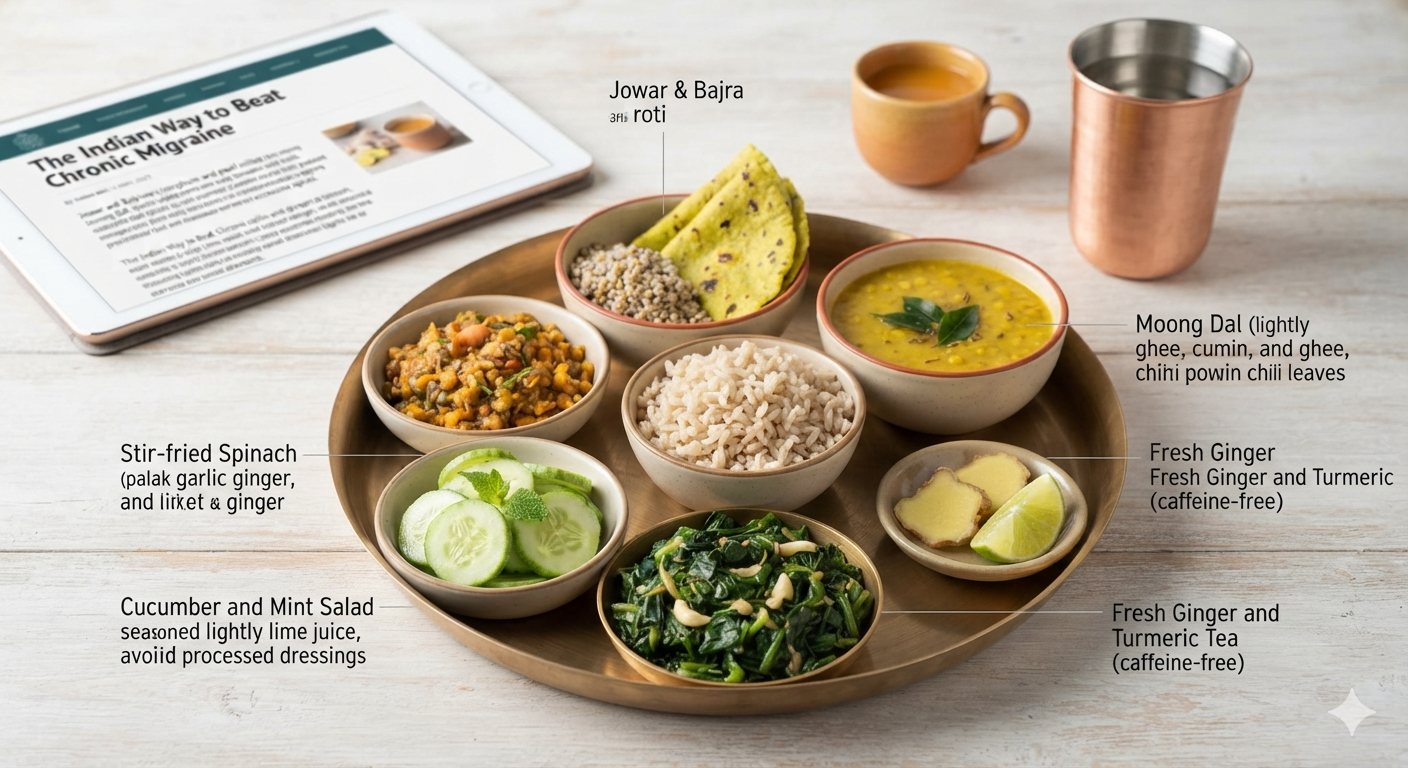
Jowar, Bajra, and Ragi:
Traditional Indian millets are exceptional sources of magnesium and complex carbohydrates. They digest slowly, preventing blood sugar spikes—a common, overlooked migraine trigger.
Alsi (Flaxseeds) and Chia Seeds:
These seeds provide alpha-linolenic acid (ALA), a plant-based omega-3 fatty acid that lowers cellular inflammation.
Soothing Green Vegetables and Legumes
Palak (Spinach) and Bathua:
Green leafy vegetables are packed with riboflavin (Vitamin B2). Riboflavin improves mitochondrial energy production in brain cells, reducing brain fatigue.
Ghiya (Bottle Gourd), Tori (Ridge Gourd), and Kaddu (Pumpkin):
These high-water-content, cooling vegetables hydrate the body efficiently while keeping gastric inflammation low.
Moong Dal (Yellow Split Mung):
The easiest lentil to digest, yellow moong dal provides stable protein without the heavy gas-producing compounds found in rajma or chole, which can upset the gut-brain axis.
Anti-Inflammatory Herbs
Adrak (Ginger):
Fresh ginger contains gingerol, a natural anti-inflammatory compound. Clinical trials have shown that ginger powder can be as effective as standard migraine medications (like sumatriptan) in reducing acute attack intensity without the side effects.
Haldi (Turmeric):
Curcumin acts as a potent antioxidant, protecting neural pathways from oxidative stress.
🗓️ The 7-Day Anti-Migraine Indian Meal Plan
This balanced meal plan utilizes fresh, locally sourced, low-tyramine Indian ingredients. It ensures stable blood sugar and optimal hydration throughout the day. To get the best results, consistency is vital when following this indian migraine diet plan daily.
Day 1
- Early Morning: 1 glass of warm water + 5 soaked, peeled almonds (never eat the skin, as it contains tannins).
- Breakfast: Freshly made vegetable Upma (made with suji/semolina, carrots, and beans) + 1 cup of light, freshly brewed ginger tea (no processed sugar).
- Mid-Morning: A small bowl of fresh papaya.
- Lunch: 2 Jowar rotis + 1 cup of Lauki (bottle gourd) sabzi cooked in minimal cow’s ghee + 1 cup of fresh, sweet home-set curd (not sour).
- Evening Snack: Roasted Makhana (fox nuts) seasoned with a pinch of turmeric and salt.
- Dinner: 1 bowl of comforting Moong Dal Khichdi cooked with a dash of fresh ginger + a side of steamed ridge gourd (tori).
Day 2
- Early Morning: 1 glass of lukewarm water infused with freshly crushed mint leaves.
- Breakfast: Ragi (finger millet) cheela made with a fresh batter of ragi flour, water, and grated carrots.
- Mid-Morning: 1 glass of fresh coconut water.
- Lunch: 1 cup of brown rice or red rice + 1 cup of yellow moong dal + 1 cup of boiled pumpkin (kaddu) sabzi.
- Evening Snack: 1 small bowl of boiled sweet corn (without artificial masala packs).
- Dinner: 2 whole wheat rotis + 1 cup of stir-fried cabbage and peas + 1 bowl of clear vegetable broth.
Day 3
- Early Morning: 5 soaked walnuts + 1 glass of plain water.
- Breakfast: Oatmeal cooked with water or fresh milk, topped with a teaspoon of flaxseed powder and a few pieces of sweet apple.
- Mid-Morning: A handful of roasted chickpeas (chana) without skin.
- Lunch: 2 Bajra rotis + 1 cup of fresh Palak (spinach) sabzi + a side of cucumber salad (avoid vinegar dressings).
- Evening Snack: Warm ginger-basil (Tulsi) infusion.
- Dinner: Baked or pan-seared freshwater fish (like Rohu or Katla, rich in Omega-3) OR 1 cup of fresh Paneer bhurji (made from scratch at home) + 2 light phulkas.
Day 4
- Early Morning: 1 glass of water warm + 1 teaspoon of soaked chia seeds.
- Breakfast: Poha (flattened rice) cooked with mild spices, boiled potatoes, and curry leaves. Avoid adding peanuts if you have a known nut sensitivity.
- Mid-Morning: 1 sweet pear or apple.
- Lunch: 2 Jowar rotis + 1 cup of mixed vegetable sabzi (beans, carrots, potatoes) + 1 cup of fresh dal.
- Evening Snack: 1 cup of puffed rice (murmura) mixed with roasted chana.
- Dinner: 1 bowl of thick vegetable oats porridge cooked with mild cumin and turmeric.
Day 5
- Early Morning: 5 soaked, peeled almonds + 2 soaked figs (anjeer).
- Breakfast: Whole wheat daliya (broken wheat porridge) cooked with milk or water and a touch of jaggery.
- Mid-Morning: 1 glass of fresh coconut water.
- Lunch: 2 phulkas + 1 cup of Tori (ridge gourd) sabzi + 1 cup of freshly prepared paneer curry (no tomato gravy; use a curd or cashew-paste base instead).
- Evening Snack: Fresh ginger tea + 2 homemade whole wheat biscuits.
- Dinner: 1 large bowl of mixed lentil soup (moong and masoor) + 1 roasted jowar roti.
Day 6
- Early Morning: 1 glass of warm water with a pinch of organic turmeric powder.
- Breakfast: Freshly made Suji Cheela with fine-chopped coriander and carrots.
- Mid-Morning: A bowl of fresh pomegranate pearls.
- Lunch: 1 cup of steamed rice + 1 cup of simple, non-sour yellow curry (Kadhi made with fresh sweet curd, not aged or fermented curd) + stir-fried ivy gourd (tindora).
- Evening Snack: Dry-roasted pumpkin seeds.
- Dinner: 2 Jowar rotis + 1 cup of boiled, lightly sautéed green beans + 1 bowl of clear moong soup.
Day 7
- Early Morning: 5 soaked, peeled almonds + 1 cup of plain warm water.
- Breakfast: Stuffed Lauki or Carrot Paratha cooked with a light brush of cow’s ghee + 1 cup of fresh, sweet curd.
- Mid-Morning: 1 glass of coconut water.
- Lunch: 2 Ragi rotis + 1 cup of Palak Paneer (ensure the paneer is freshly made at home) + a side of sliced beetroot.
- Evening Snack: Warm ginger tea.
- Dinner: A large bowl of vegetable Khichdi + 1 teaspoon of pure cow’s ghee.
⚠️ Crucial Dietary Rules for Chronic Migraine Prevention
Beyond what you eat, how and when you eat plays an equally vital role in managing the trigeminal nerve activation that sparks a migraine.
Maintain Strict Meal Consistency
Your brain thrives on predictability. Skipping breakfast or delaying lunch causes your blood glucose levels to plummet (hypoglycemia). This drop triggers a stress response in the body, releasing cortisol and epinephrine, which constricts cerebral arteries and initiates a migraine cascade. Eat every 3 to 4 hours.
Use the “Freshness Rule” for Leftovers
In an Indian household, storing leftover sabzi, dal, or atta in the fridge for 2 to 3 days is incredibly common. However, as cooked protein-rich food sits, its tyramine content multiplies exponentially. For chronic migraine patients, food must be consumed within 12 to 24 hours of cooking. Avoid eating week-old frozen meals entirely.
Hydrate Beyond Just Water
Dehydration is one of the most frequently cited immediate migraine triggers. Aim for 2.5 to 3 liters of fluids daily. Integrate natural electrolytes like tender coconut water or standard buttermilk made from fresh, non-sour curd. Avoid commercial energy drinks or flavored waters, which contain artificial sweeteners like aspartame—another documented neurological trigger.
🔄 How to Safely Track and Identify Your Triggers
A symptom diary helps you customize this baseline indian migraine diet plan to fit your unique biological thresholds.
Because every individual’s biochemistry is unique, a food that triggers an attack in one person might be perfectly safe for you. To identify your personal triggers accurately, maintain a dedicated Migraine Diary.
Log the following details daily for at least 30 days:
- Everything you consumed (including beverages and snacks)
- The exact time you ate
- Any symptoms experienced (mild throbbing, aura, nausea)
- The weather or barometric pressure shifts
When attempting to reintroduce a restricted food item—such as tomatoes—do so in a very small quantity on a day when you are well-rested and stress-free. If no headache occurs within 48 hours, that item may safely remain in your dietary rotation. If you notice a flare-up, eliminate it for at least 3 months before trying again.
🏥 When to Seek Advanced Clinical Intervention
While lifestyle adjustments and an optimal Indian diet plan provide a foundational defense against chronic headaches, they are components of a broader medical strategy. Nutritional changes should run parallel to, rather than replace, specialized medical guidance.
Consult a neurologist or primary care physician immediately if you experience any of the following “red flag” symptoms:
- A sudden, explosive headache that reaches maximum intensity within seconds (often called a “thunderclap” headache).
- Headaches accompanied by a fever, stiff neck, confusion, or seizures.
- Neurological deficits, such as unexplained weakness, numbness, or difficulty speaking.
- A major change in your typical headache pattern after the age of 50.
⚖️ Medical Disclaimer:
Nutritional recommendations outlined in this guide are informed by peer-reviewed headache management strategies published by the American Migraine Foundation and the International Headache Society. This guide does not replace professional medical diagnosis, treatment, or direct pharmacological prescription from your doctor.
🖋️ Author : Dr. Ravi Bhatt (BHMS)