Imagine waking up, opening your eyes to a brand new day, and immediately feeling a dull, throbbing pain behind your eyes or across your temples. If you find yourself frequently waking up with a morning headache, you are not alone. Millions of people experience early-morning head pain, often assuming it is just a normal sign of exhaustion or everyday stress.
However, waking up with a headache is a clear signal from your body. It usually means your nervous system or blood flow is being disrupted while you rest. The good news is that by making a few intentional, science-backed changes to your nighttime habits, you can calm your brain and stop the pain before it even starts.
In this patient education guide, we will break down exactly why these morning headaches happen and share five practical steps to fix your sleep routine for good.
Why Am I Waking Up with a Morning Headache?
To stop early morning head pain, it helps to understand what is happening inside your body while you sleep. According to clinical tracking by the Sleep Foundation on Morning Headaches, early morning discomfort is deeply tied to sleep architecture, airway patency, and underlying muscle tension. When you sleep, your brain goes through critical recovery cycles. If those cycles are cut short or strained, head pain can easily be triggered by the time you wake up.
The most common lifestyle reasons for a morning headache include:
Circadian Rhythm Shifts:
Going to bed or waking up at erratic times confuses your brain’s internal clock, which controls your body’s natural pain thresholds.
Nighttime Dehydration:
Your body goes 7 to 8 hours without water. As documented by Medical News Today on Waking Up with a Headache, mild overnight fluid loss causes brain tissues to lose moisture and temporarily shrink, pulling slightly on the sensitive nerve endings surrounding your brain.
Poor Neck Support:
Sleeping on a pillow that is too high, flat, or soft forces your neck into awkward angles. This strains the upper cervical muscles, radiating tension upward into your skull.
5 Steps to Fix Your Sleep Routine and Stop the Pain
If you want to prevent waking up with a morning headache, consistency is your best tool. Comprehensive management rules outlined in the American Migraine Foundation Guide to Healthy Sleep highlight that behavioral modification is an incredibly powerful first line of defense against neurological head pain.
While optimizing your nightly rest is crucial, combining proper sleep tracking with an elimination diary forms the complete cornerstone of comprehensive natural migraine prevention.
Follow this step-by-step checklist to optimize your nights for pain-free mornings:
Lock In a Strict Wake-Up Window
Your brain thrives on predictable routines. Choose a realistic wake-up time and stick to it every single day, including weekends. Sleeping in late on Saturdays or Sundays alters your sleep cycles and can cause a “weekend migraine” or an oversleeping headache.
Practice a 90-Minute Digital Sunset
The blue light emitted from smartphones, tablets, and televisions mimics daylight. This light halts your brain’s production of melatonin, the vital hormone needed to trigger deep, restorative sleep stages. Turn off your electronic devices at least 90 minutes before bed to allow your nervous system to relax naturally.
Switch to an Ergonomic Pillow
Your head and neck should rest in a straight, neutral line, completely parallel to your mattress. If you sleep on your side or back, look for a supportive memory foam or contoured cervical pillow. Avoid stomach sleeping entirely, as it forces your head to twist sharply to one side for hours, pinching delicate neck nerves and triggering tension headaches.
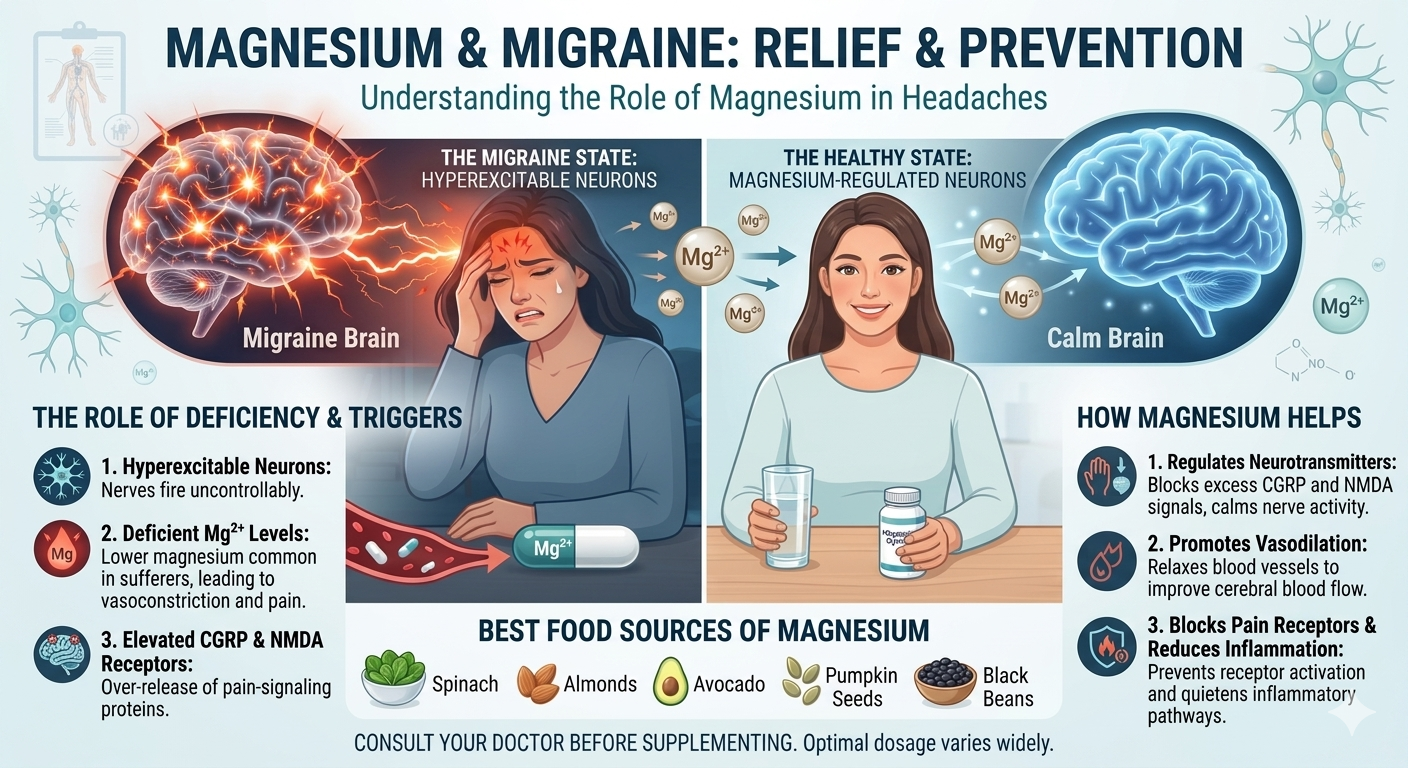
Supplement with Doctor-Approved Magnesium
Clinical papers hosted by the National Institutes of Health (NIH) on Magnesium in Headache establish that individuals who struggle with chronic headaches frequently exhibit low structural magnesium levels. Taking a daily oral magnesium supplement (such as magnesium citrate or magnesium glycinate) relaxes restricted blood vessels and smooths muscle tissue. Always check the physical label and consult your healthcare provider to find the safest dosage for your body.
             ┌────────────────────────────────────────────────────────┐
             │         Is Your Sleep Routine Causing Headaches?
             └───────────────────────────┬────────────────────────────┘
                                         │
                    Is your wake-up time the same every day?
                                 ├─── NO  ──► Fix your Circadian Anchor
                                 └─── YES
                                         │
                    Do you use screens right before bedtime?
                                 ├─── YES ──► Start a 90-Min Digital Sunset
                                 └─── NO
                                         │
                     Do you wake up feeling thirsty or parched?
                                 ├─── YES ──► Try Pre-Bed Hydration
                                 └─── NO
                                         │
                    Is your neck twisted or sore in the morning?
                                 └─── YES ──► Use a Neutral Cervical Pillow
When a Morning Headache Signals Something More
Sometimes, waking up with a morning headache is caused by an underlying medical issue that requires a specific clinical approach rather than just a better bedtime habit. Consider these three common medical possibilities:
Obstructive Sleep Apnea (OSA)
If you repeatedly stop breathing for brief moments during the night, your brain experiences sudden drops in oxygen and a buildup of carbon dioxide. This oxygen deprivation dilates the blood vessels in your skull, causing a severe headache upon waking. Data gathered by SleepApnea.org on Sleep Apnea Headaches confirms that nearly one-third of people with untreated sleep apnea suffer from chronic morning head pain.
Signs to watch for: Loud snoring, waking up gasping for air, daytime fatigue, or a very dry mouth.
Clinical treatment: Early morning headaches caused by sleep apnea respond remarkably well to a continuous positive airway pressure (CPAP) device, often resolving completely within a few weeks.
Teeth Grinding (Bruxism)
Clenching or grinding your teeth while asleep places immense physical pressure on your temporomandibular joints (TMJ) and facial muscles. This tension radiates up the sides of your face, creating a dull, tight ache in your temples by morning.
Signs to watch for: A sore jaw, clicked joints, sensitive teeth, or a tight feeling in your face when you wake up.
Clinical treatment: Visiting a dentist for a custom-fitted nighttime mouth guard can instantly cushion your bite and eliminate these specific tension headaches.
Medication Overuse (Rebound Headaches)
If you take over-the-counter pain relievers or prescription rescue medications more than two or three days a week, your body can become dependent on them. As the medication naturally wears off in the middle of the night, you enter a mini-withdrawal state, causing you to wake up with a severe “rebound” headache.
How to Track Your Patterns
You cannot prevent a symptom until you accurately track it. We highly recommend keeping a daily sleep and headache diary. Write down what time you went to bed, how many hours you slept, whether you woke up with a headache, and what you ate or drank the evening before. Within two to three weeks, you and your doctor will be able to clearly see your unique personal triggers.
If you are already practicing excellent sleep hygiene but find that your morning head pain is becoming more frequent, severe, or is accompanied by sudden changes in vision or balance, schedule a thorough evaluation with your primary care provider.
Medical Disclaimer:The educational information provided in this article is for informational purposes only and is not intended to be a substitute for professional medical advice, diagnosis, or treatment. Always seek the advice of your physician or another qualified healthcare provider with any questions you may have regarding a medical condition.
Content written and reviewed by: Dr.Ravi Bhatt (BHMS)